 Topics
Economic Pessimism Deepens as War With Iran Pushes Gas Prices Higher
At the beginning of 2026, Data for Progress’ polling revealed that voters have remained pessimistic about the economy since Donald Trump took office, despite his campaign promise to “make America affordable again.” Since then, Trump has launched an unpopular war that has created a surge in gas prices across the country, while continuing to defend his illegal and expensive tariff policy.
In a new survey weighted to a likely 2026 midterm electorate, Data for Progress finds that voters report worsening conditions across most aspects of the economy in recent months, as well as sharp increases in spending on gas.
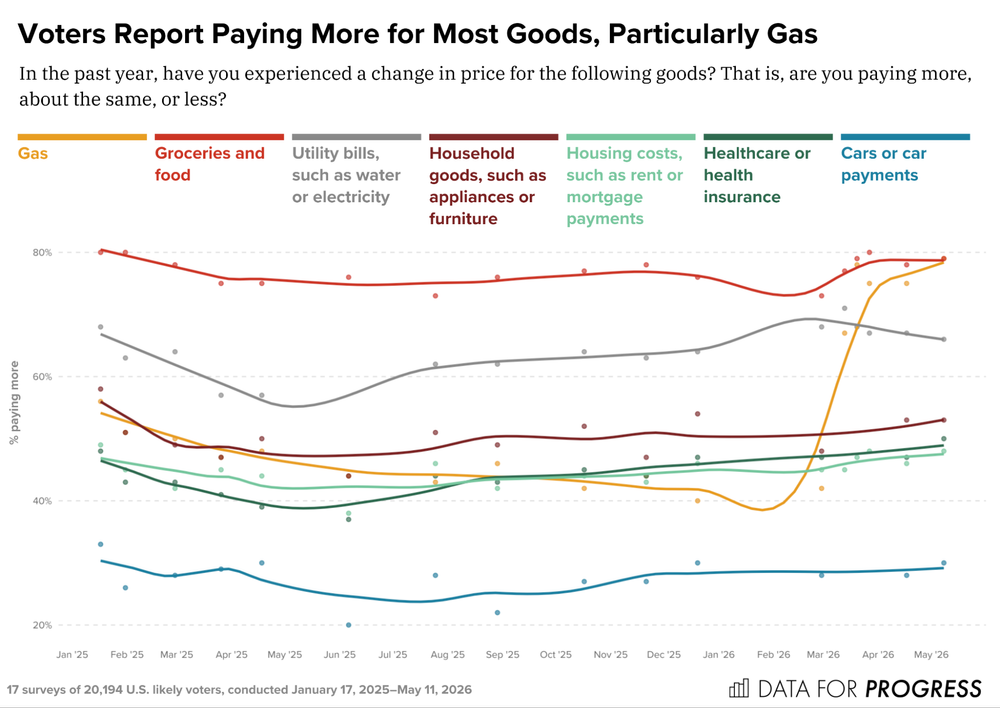
When asked whether they’ve paid more, about the same, or less for various goods over the past year, an overwhelming majority of voters have consistently reported paying more for groceries and food. However, recent jumps in gas prices have brought the two roughly even.
Notably, utility costs continue to be a pressing issue for voters, weighing even more heavily than household goods, healthcare, or housing costs.
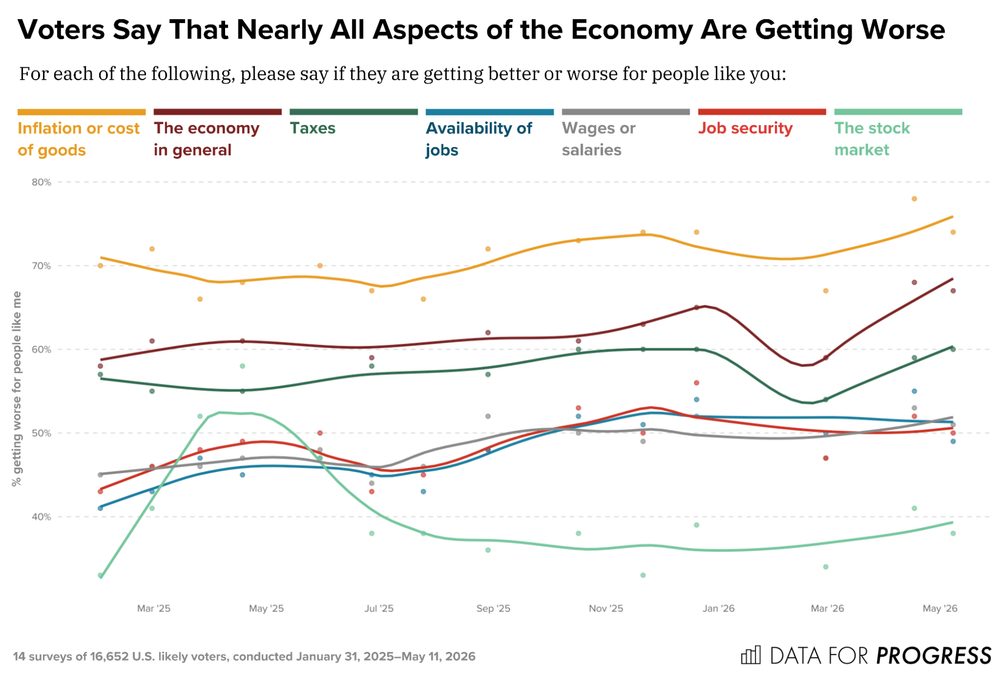
When voters are asked how different aspects of the economy are shifting for people like them, majorities across the board say things are getting worse. Consistently, voters strongly agree that the cost of goods and services is getting worse, with a slight jump from 70% of voters in January 2025 to 74% of voters in May 2026.
The survey also finds a significant uptick in the percentage of voters who say “the economy in general” is getting worse. Other employment-related categories like job security, availability of jobs, and wages or salaries have also seen an increase in voter pessimism since the beginning of Trump’s second term.
Taxes and the stock market are the two exceptions to the trend: Views on taxes have held steady, while perceptions of stock market troubles ticked up during the April 2025 turmoil but have otherwise leveled.
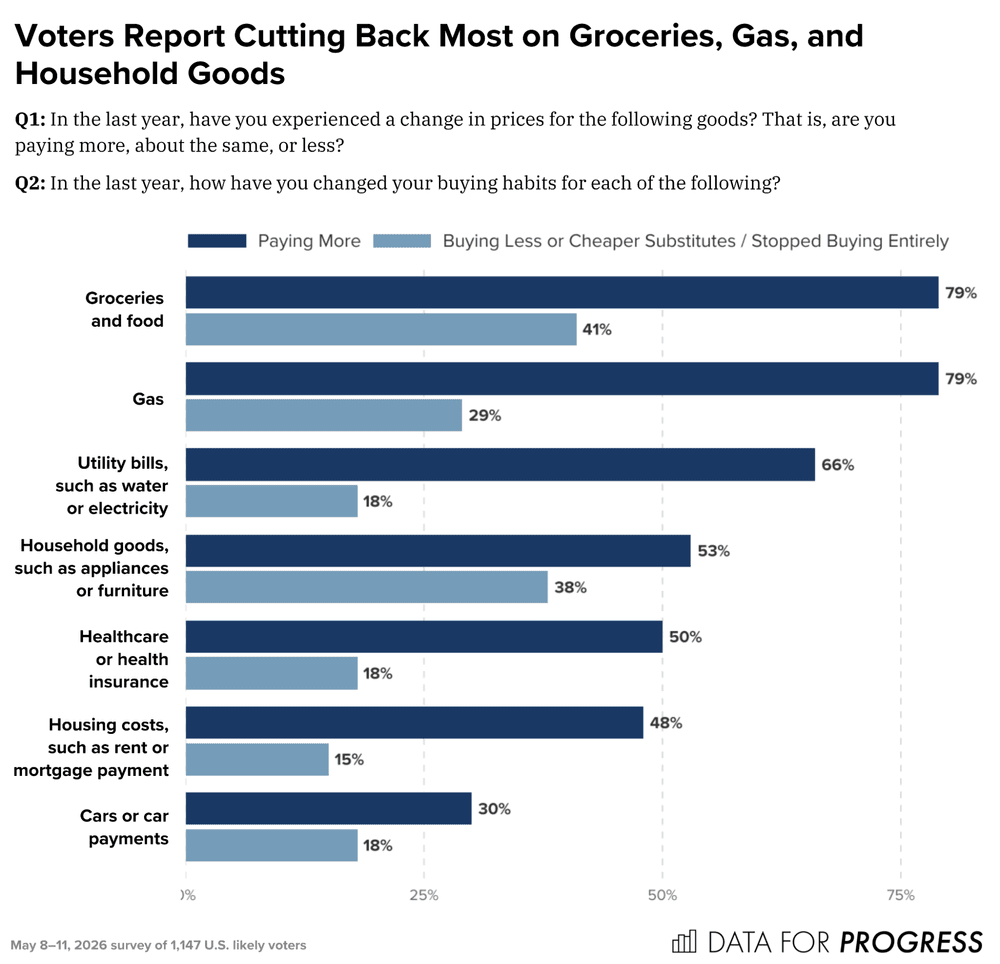
To examine where rising costs are actually changing behavior, the survey asked voters which goods they are paying more for, and which goods they’ve cut back on or switched to a cheaper alternative.
The results demonstrate that some goods, like utilities, housing, and healthcare, are inelastic, in that voters report paying more but show little flexibility in buying less or opting for cheaper versions.
However, voters do report cutting back their spending in other categories, including household goods and groceries. Additionally, voters report surprising flexibility in terms of gas usage, replicating the findings from other pollsters that have found a significant percentage of Americans cutting back on driving or travel.
This survey reveals that voters remain pessimistic about the economy, with majorities across the board reporting that most aspects of the economy are getting worse for people like themselves. Voters also report paying more for most goods, especially gas and groceries, leading many to cut back their spending in these areas.
Survey Methodology
From May 8 to 11, 2026, Data for Progress conducted a survey of 1,147 U.S. likely voters nationally using web panel respondents. The sample was weighted to be representative of likely voters by age, gender, education, race, geography, and recalled presidential vote. The survey was conducted in English. The margin of error associated with the sample size is ±3 percentage points. Results for subgroups of the sample are subject to increased margins of error. Partisanship reflected in tabulations is based on self-identified party affiliation, not partisan registration. For more information, please visit dataforprogress.org/our-methodology.
Source link www.dataforprogress.org
